Hisn Al-Mateen Bloc report on digital narratives and the information war targeting Algeria
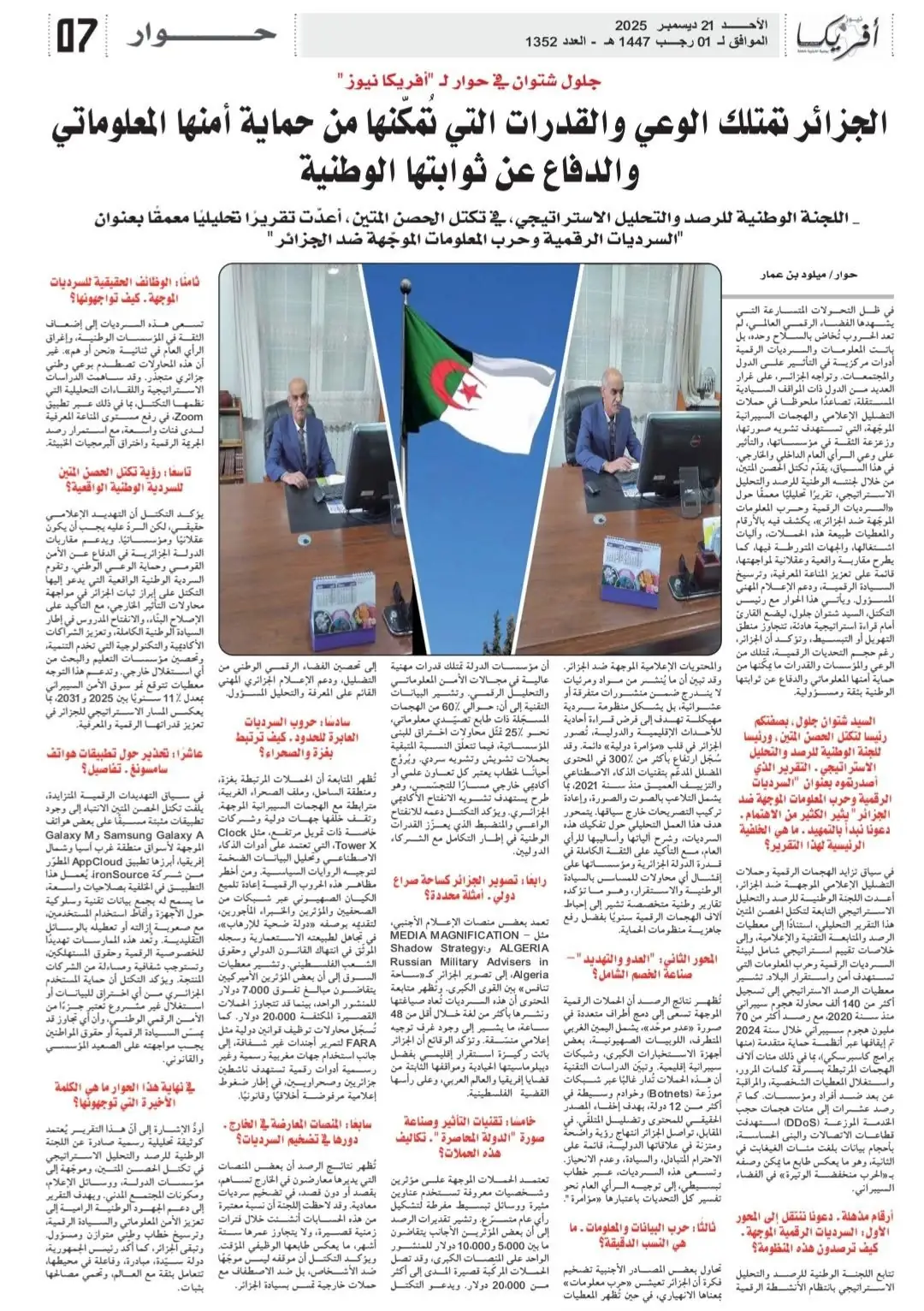
Subject: Digital narratives and the information war directed against Algeria
Addressees: State institutions – Media – Civil society
Preamble
Amid intensifying digital attacks and disinformation campaigns targeting Algeria, the National Committee for Monitoring and Strategic Analysis of Hisn Al-Mateen Bloc has prepared this analytical report, based on technical and media monitoring data and on the conclusions of a comprehensive strategic assessment of the digital-narrative environment and the information war targeting the country’s security and stability.
Monitoring data point to more than 140,000 attempted cyber-attacks since 2020 and more than 70 million attacks foiled in 2024 thanks to advanced protection systems, including Kaspersky solutions. Dozens of DDoS attacks have also hit the telecommunications sector and sensitive infrastructure, with volumes reaching several hundred gigabits per second — a clear sign of a “low-intensity war” in cyberspace.
1. Directed digital narratives – overview
The analysis shows that this hostile content is not a set of isolated or spontaneous posts but a structured narrative system that seeks to impose a one-sided reading of events and portray Algeria as being at the centre of a “permanent conspiracy”. Since 2021, the volume of manipulated content supported by artificial intelligence and deepfake technologies has risen by more than 300%. The report aims to deconstruct these narratives, expose their mechanisms and reaffirm full confidence in the Algerian State’s ability to thwart any attempt against national sovereignty and stability.
2. The “enemy and threat” axis – manufacturing a global adversary
The campaigns tend to merge the Western far right, Zionist lobbies, certain foreign intelligence services and regional cyber networks into the image of a “unified enemy”, often operating through botnets and proxy servers in more than 12 countries. Meanwhile, Algeria pursues a balanced and sovereign foreign policy based on mutual respect and non-interference.
3. Information and data warfare
Some foreign sources exaggerate the idea of a “total information war” in Algeria, whereas the data show the maturity and high competence of national institutions in cybersecurity. Around 60% of attacks are phishing, about 25% target institutional infrastructure, and the rest mainly involve disinformation and narrative manipulation. The Bloc supports controlled, strategic academic openness that strengthens national capabilities.
4. Algeria portrayed as an arena of international rivalry
Certain foreign platforms present Algeria as an arena of great-power competition; their articles are often translated and relayed in several languages within 48 hours, revealing media coordination cells. The facts show that Algeria remains a cornerstone of regional stability thanks to its balanced diplomacy, consistent positions and firm commitment to the Palestinian cause.
5. Influence techniques – creating the image of a “besieged” State
Targeted campaigns rely on influencers and well-known media figures to spread simplistic, emotional messages; some foreign influencers reportedly earn between USD 5,000 and 10,000 per post, and short coordinated campaigns can reach USD 20,000. The Bloc calls for greater resilience of the national cyberspace and support for ethical, analytical journalism.
6. Transnational narrative wars
Campaigns on Gaza, the Sahel and Western Sahara are interconnected with coordinated cyber offensives involving international actors and well-funded private firms such as Clock Tower X. Among the most worrying trends is the rebranding of the Zionist regime as a “victim of terrorism”, the targeted use of legal instruments such as the US Foreign Agents Registration Act (FARA), and the involvement of Moroccan actors, official or not, in hostile digital actions against Algerian and Sahrawi activists.
7. Opposition platforms based abroad
Some platforms run from abroad knowingly or unknowingly amplify hostile narratives; most of their accounts are less than six months old. The Bloc stresses that its stance targets not individuals but external narrative alignments that harm Algeria’s sovereignty.
8. The real functions of directed narratives
These narratives seek to weaken trust in national institutions and polarise public opinion, but they come up against a strong and lucid Algerian national consciousness. The Bloc’s analytical work, including online meetings and study sessions, has helped strengthen the cognitive immunity and digital vigilance of many actors.
9. Hisn Al-Mateen Bloc’s vision – for a realistic national narrative
The Bloc recognises the reality of the information threat while advocating a rational, institutional and coordinated response based on resilience, constructive reform, controlled openness and stronger technological and academic partnerships, with full respect for national sovereignty. Algeria’s cybersecurity market is projected to grow by an average of 11% a year between 2025 and 2031.
10. Warning about apps pre-installed on Samsung smartphones
The Bloc draws attention to apps pre-installed on Samsung Galaxy A and M models sold in West Asia and North Africa, notably AppCloud, developed by ironSource, which runs in the background with extensive permissions, collects technical and behavioural data and is hard to remove by conventional means — a threat to privacy and consumer rights that calls for more transparency from manufacturers.
Conclusion
This report, addressed to State institutions, the media and civil society, aims to support national efforts in cybersecurity and digital sovereignty and to foster a balanced, responsible public discourse. As the President of the Republic has affirmed, Algeria remains a sovereign, active and confident State, able to protect its interests and contribute lastingly to regional stability.
Issued by the National Committee for Monitoring and Strategic Analysis of Hisn Al-Mateen Bloc — Bloc president: Djelloul Chetouane
One Homeland, One Nation, One History, One Destiny
Photo album
Related
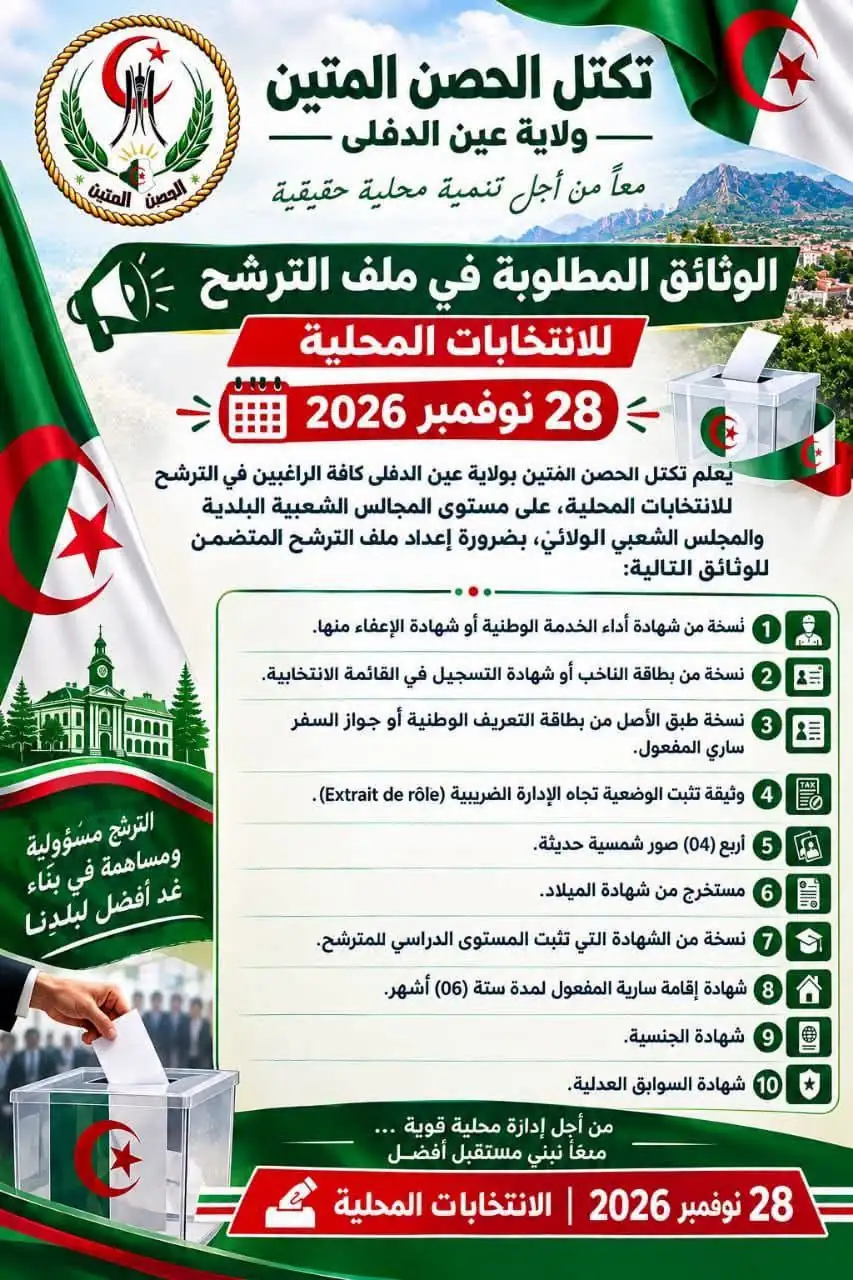 National affairs28 November 2026 local elections: the Bloc in Aïn Defla lists the documents required to stand
 National affairsBloc president congratulates Omar Fellah on the Bloc's electoral success in Aïn Defla
 National affairsIndependence Day: for the Bloc, the message of 5 July lives on through strong institutions and unity